Trending

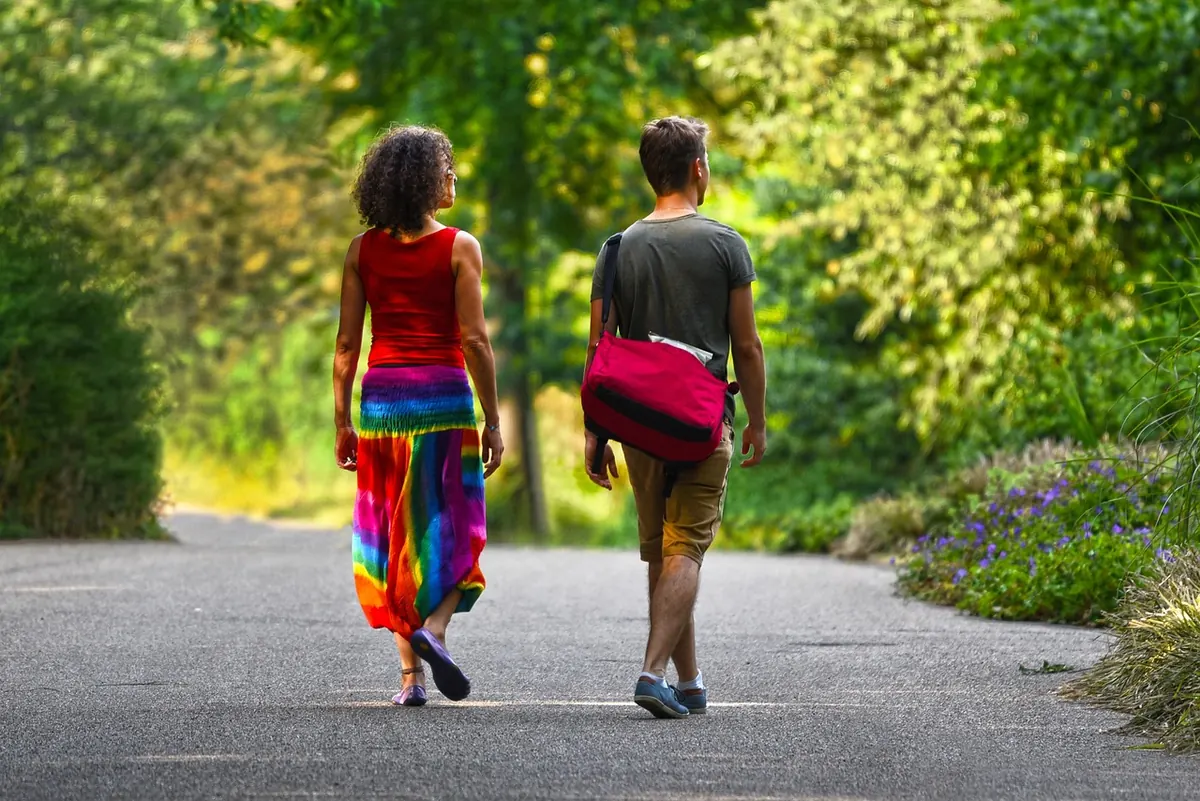
The Dale Quarter Greenway is the sort of local route that rewards a half-hearted attempt. You can walk it in trainers, ride it on a borrowed bike, and turn back at any point without feeling you have failed at anything. It follows the old railway embankment from behind the Mill Gate car park, past the reservoir, and down to Marsh Lane — flat, traffic-free, and shaded for most of its length by the same line of ash and hawthorn that was there when the trains stopped.
The first thing to understand is that the Greenway is a corridor, not a loop. Where you start decides how far you go, so pick an end that suits your energy rather than your ambition. The surface changes as you travel: tarmac for the first stretch out of Mill Gate, compacted gravel through the middle, then a boardwalk over the wet ground near the reservoir. Road bikes cope with the gravel on a dry day; they do not enjoy the boardwalk after rain.
Marker posts are numbered from the Mill Gate end, so you always know how far you have come and how far is left to walk back. Four places to join:
From Mill Gate to the second gate and back. Flat tarmac throughout, wide enough for a pushchair and a passing dog walker at the same time. Choose this on a grey afternoon when you want fresh air rather than a project.
Mill Gate to Marsh Lane, the classic version. Allow an hour and a quarter at a stroll, forty minutes at a brisk pace, and half an hour on a bike. There is one steady rise around the old cutting, but nothing that counts as a hill. Arrange a lift or a bus home from Marsh Lane if you would rather not walk it twice.
Continue past Marsh Lane along the field edge to the far end and return. Best done on a bike, or as a half-day walk with a proper stop in the middle. The final section is the quietest and the least shaded, so save it for spring and autumn rather than high summer.
Turn around whenever the day stops being enjoyable. The Greenway does not keep score.
Weekday mornings are the Greenway at its best: dog walkers, a few runners, the occasional heron on the reservoir. Weekend afternoons between eleven and two are the busiest, and the boardwalk gets congested because there is no room to pass.
Season by season, the trade-offs are straightforward. Spring brings the bluebells along the embankment and mud underfoot. Summer is beautiful and nettle-heavy, so wear long trousers if you are walking the narrower middle stretch. Autumn is the local favourite: dry underfoot, cool enough to push on. Winter is fine on the tarmac, but the boardwalk freezes before anything else does, and the clay section between the second gate and the reservoir holds water for days after rain. Check the forecast for the whole afternoon rather than the next hour — the corridor is exposed at both ends and the weather turns faster here than in the streets around the quarter.
You do not need specialist kit for the shorter routes. You do need to be honest about which route you are doing.
If you have a heart condition, are pregnant, or are returning to exercise after injury or illness, speak to your GP or another health professional before tackling the longer routes. The short section is gentle, but nine miles is nine miles.
Walkers have priority on the boardwalk and the two narrow bridges. Riders should slow to walking pace, ring once, and pass on the left where there is room. Dogs stay on short leads between the reservoir gate and Marsh Lane. If you are riding in a group, ride two abreast at most and let faster riders through.
The Greenway is at its most useful when it becomes a habit: a quick loop after work, a Saturday ride to the reservoir, a slow Sunday walk with a flask. Start short, go often, and let the longer routes wait until you actually want them.
Photo: MabelAmber / Pixabay